

Synthetic and Bio-Based Adipic Acid Market was valued US$ XX Bn in 2018 and is expected to reach US$ XX Bn by 2027, at CAGR of 6.3 % during forecast period of 2019 to 2027.
To know about the Research Methodology:-Request Free Sample Report
Adipic acid is used in the production of nylon and in industrial as a dicarboxylic acid. The majority of the total volume of adipic acid produced worldwide 60 % is used in the production of nylon, while the remainder is divided between cosmetics, pharmaceuticals, paints and coatings, plastic additives, polyurethane resins, food additives, etc.
The report study has analyzed revenue impact of covid-19 pandemic on the sales revenue of market leaders, market followers and disrupters in the report and same is reflected in our analysis.
Synthetic and Bio-Based Adipic Acid Market Drivers and Restrains
The Synthetic and Bio-Based Adipic Acid Market has witnessed considerable growth in recent years due to growing demand for eco-friendly materials and its acceptance by the consumers. The Synthetic and Bio-Based Adipic Acid Market has become more competitive and price-sensitive owing to the high potential and steady growth of the Synthetic and Bio-Based Adipic Acid Market. Bio-based adipic acid market is still in its beginning phase and is commercialize from 2015 to 2017. Some key players operating the Synthetic and Bio-Based Adipic Acid market are like Rennovia, Verdezyne and DSM have already arrived in the bio-based adipic acid market and started their pilot operations with extensive research and development activities to support their processes, many other companies are projected to follow them.
Manufacturers in the Synthetic and Bio-Based Adipic Acid are focusing on competitive pricing as the strategy to capture significant market share. Moreover, strategic mergers and acquisitions and technological innovations are also the key focus areas of the manufacturers.
Synthetic and Bio-Based Adipic Acid Market Segmentation Analysis
In terms of product type, the synthetic and bio-based adipic acid market is segmented into food grade and industrial grade. Food grade segment is expected to grow at XX% CAGR during the forecast period. In terms of applications other than nylon, the synthetic and bio-based adipic acid market is segmented into paints and coatings, low-temperature lubricants, plastic additives, polyurethane resins, food additives and other synthetic fibers. The report also covers, other uses of Adipic Acid in the production of nylon, in medical and food industries, as a gelling aid and flavoring in food preparation, in polymeric coating of hydrophilic drugs and other formulations in medical industry.
Synthetic and Bio-Based Adipic Acid Market Regional Analysis
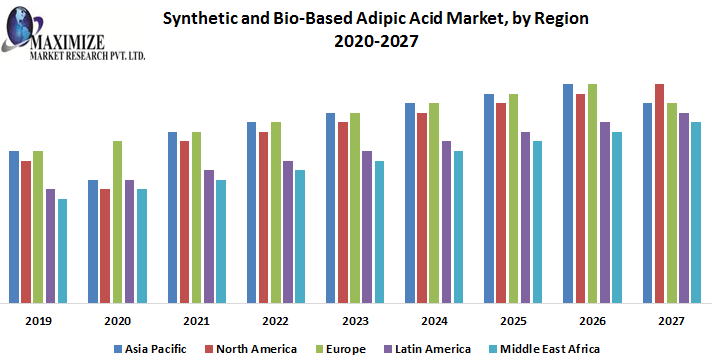
On the basis of region synthetic and bio-based adipic acid market divided into five regions such as Asia Pacific, North America, Europe, Latin America, and Middle East Africa. Among all the regions, the Asia Pacific had the XX% market share in 2018 and is projected to lead the market during the forecast period, because of key players operating the synthetic and bio-based adipic acid market are like Rennovia, Genomatica, Gfbiochemicals Verdezyne and DSM have already arrived in Asia Pacific.
The objective of the report is to present comprehensive analysis of Synthetic and Bio-Based Adipic Acid Market including all the stakeholders of the industry. The past and current status of the industry with forecasted market size and trends are presented in the report with the analysis of complicated data in simple language. The report covers all the aspects of industry with dedicated study of key players that includes market leaders, followers and new entrants by region. PORTER, SVOR, PESTEL analysis with the potential impact of micro-economic factors by region on the market have been presented in the report. External as well as internal factors that are supposed to affect the business positively or negatively have been analyzed, which will give clear futuristic view of the industry to the decision makers. The report also helps in understanding Synthetic and Bio-Based Adipic Acid Market dynamics, structure by analyzing the market segments, and project the Synthetic and Bio-Based Adipic Acid Market size. Clear representation of competitive analysis of key players by Synthetic and Bio-Based Adipic Acid Type, price, financial position, product portfolio, growth strategies, and regional presence in the Synthetic and Bio-Based Adipic Acid Market make the report investor’s guide.
Scope of the Synthetic and Bio-Based Adipic Acid Market : Inquire before buying
Synthetic and Bio-Based Adipic Acid Market, by Product Type
• Food Grade
• Industrial Grade
Synthetic and Bio-Based Adipic Acid Market, by Applications Other Than Nylon
• Paints and coatings
• Low-temperature lubricants
• Plastic additives
• Polyurethane resins
• Food additives
• Other synthetic fibers
Synthetic and Bio-Based Adipic Acid Market, by Region
• Asia Pacific
• North America
• Europe
• Latin America
• Middle East Africa
Synthetic and Bio-Based Adipic Acid Market, Major Players
• Invista
• Rennovia
• Rodenburg Biopolymers
• Bioamber
• Verdezyne
• DSM
• BioAmeber
• Ameris
• Aemethis
• Genomatica
• Rennovia
• Arkema
• Evonik
• Lanxess
• Sumitomo Chemical Co. Ltd.
• Koninklijke DSM N.V.
• Mitsui Chemicals Inc
• The Dow Chemical Co.
• Rhodia
• BASF
• Ascend performance materials
• Shangdong haili
• Liaoyang petrochemical
For More Information Visit @: Maximize Market Research Company
This Report Is Submitted By : Maximize Market Research Company
Customization of the report:
Maximize Market Research provides free personalized of reports as per your demand. This report can be personalized to meet your requirements. Get in touch with us and our sales team will guarantee provide you to get a report that suits your necessities.
About Maximize Market Research:
Maximize Market Research provides B2B and B2C research on 20,000 high growth emerging opportunities & technologies as well as threats to the companies across the Healthcare, Pharmaceuticals, Electronics & Communications, Internet of Things, Food and Beverages, Aerospace and Defense and other manufacturing sectors.


