

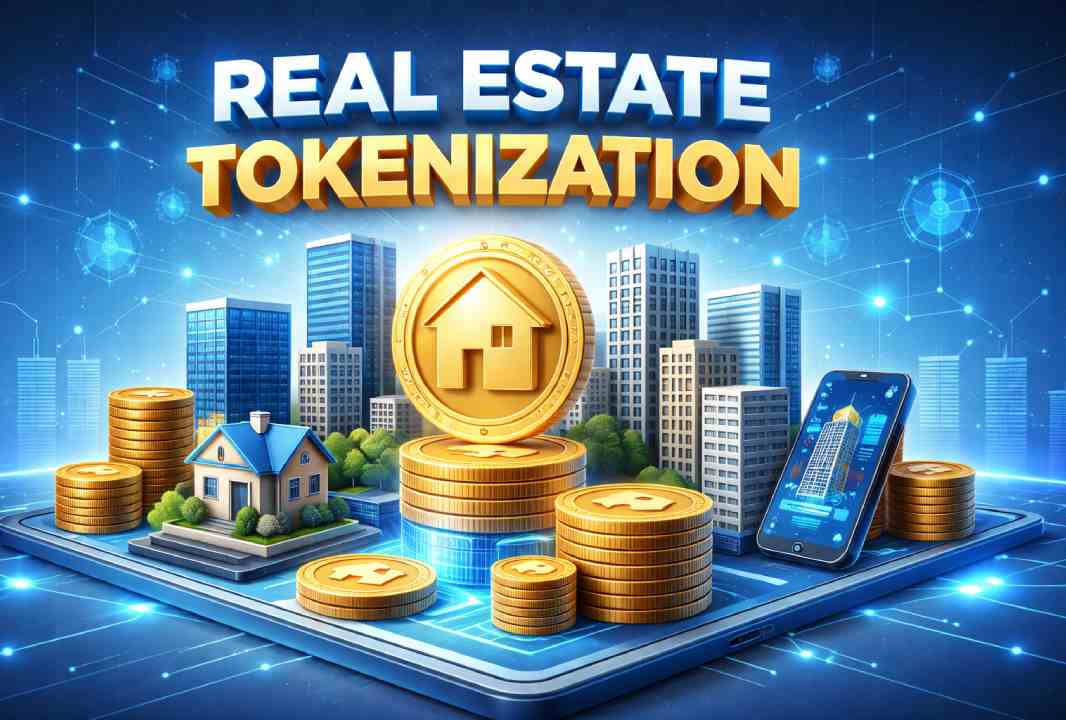
The real estate industry is undergoing a structural shift driven by digital technologies that are reshaping how properties are marketed, financed, managed, and transacted. Traditional models—reliant on manual documentation, fragmented data systems, and intermediary-heavy workflows—are being replaced by integrated digital ecosystems. These ecosystems combine data analytics, automation, blockchain systems, artificial intelligence, and immersive visualization tools to improve efficiency and decision-making across the property lifecycle.
Upgrading a real estate business with digital innovation is not limited to adopting new tools. It involves rethinking operational architecture, customer engagement models, and asset management frameworks in ways that align with a data-driven and digitally connected environment.
Digital Transformation in Real Estate: A Structural Shift
Digital innovation in real estate tokenization refers to the integration of advanced technologies into core processes such as property valuation, leasing, sales, investment analysis, and portfolio management. Platforms like Zillow have demonstrated how data aggregation and predictive analytics can redefine property discovery and valuation models.
At a broader level, digital transformation is shifting real estate from a static, document-heavy industry to a dynamic, real-time information ecosystem. Property data is no longer stored in isolated silos; it is continuously updated, analyzed, and distributed across platforms that support faster and more informed decision-making.
1. Data-Driven Decision-Making Through Analytics Systems
One of the most significant upgrades in modern real estate businesses is the use of data analytics to guide decisions. Instead of relying on historical intuition or limited market reports, firms now use structured and unstructured data to evaluate pricing trends, demand patterns, and investment risks.
Advanced analytics systems process data from multiple sources, including transaction records, demographic shifts, infrastructure development, and macroeconomic indicators. This allows stakeholders to identify undervalued assets, forecast rental yields, and optimize portfolio allocation.
Machine learning models further enhance this process by identifying hidden correlations in market behavior. Over time, these systems improve accuracy, enabling real estate businesses to move from reactive strategies to predictive decision-making frameworks.
2. Artificial Intelligence in Property Valuation and Management
Artificial intelligence is increasingly central to real estate modernization. AI-powered valuation tools analyze thousands of variables simultaneously, including location trends, property condition, comparable sales, and market sentiment. This leads to more accurate and dynamic property pricing models.
AI is also transforming property management. Automated systems can predict maintenance requirements, optimize energy usage in buildings, and streamline tenant communication. Chat-based assistants handle routine queries, while predictive algorithms help reduce operational downtime.
In commercial real estate, AI supports lease optimization by analyzing tenant behavior and suggesting pricing strategies that maximize occupancy and revenue stability.
3. Blockchain and Tokenization in Real Estate Ownership Models
Blockchain technology introduces new possibilities for ownership, investment, and asset liquidity. By recording property ownership on decentralized networks such as Ethereum and Polygon, real estate assets can be digitally represented as tokens.
This process, known as tokenization, allows properties to be divided into fractional units, enabling broader investor participation. Instead of requiring full property ownership, investors can hold small portions of high-value assets.
From an operational perspective, blockchain enhances transparency by creating immutable records of ownership and transaction history. It also reduces reliance on intermediaries such as brokers and escrow agents, streamlining transaction processes and reducing settlement times.
4. Digital Platforms for Property Discovery and Transactions
Digital marketplaces have fundamentally changed how properties are discovered and transacted. Online listing platforms aggregate property data, images, virtual tours, and pricing information into centralized interfaces.
These platforms reduce friction in the buying and selling process by enabling direct communication between buyers, sellers, and agents. Advanced filtering systems allow users to refine searches based on specific criteria such as budget, location, property type, and investment potential.
Additionally, integrated transaction systems now support digital documentation, electronic signatures, and secure payment processing, reducing the dependency on physical paperwork and in-person meetings.
5. Virtual Tours and Immersive Visualization Technologies
Virtual reality (VR) and augmented reality (AR) technologies are transforming property viewing experiences. Instead of physically visiting multiple properties, potential buyers can explore immersive 3D models that simulate real-world environments.
These tools are particularly valuable in international real estate markets, where physical travel may be costly or impractical. High-resolution digital twins of properties allow stakeholders to evaluate spatial layouts, interior designs, and structural features remotely.
In commercial real estate development, immersive visualization also supports planning and design validation before construction begins, reducing costly design errors and improving stakeholder alignment.
6. Smart Contracts and Automated Transactions
Smart contracts are self-executing agreements encoded on blockchain networks. In real estate, they automate critical processes such as rental payments, ownership transfers, and escrow management.
For example, once predefined conditions are met, such as payment confirmation, ownership rights can be automatically transferred without manual intervention. This reduces administrative overhead and minimizes the risk of disputes.
Smart contracts also enable programmable revenue distribution models, where rental income or profit-sharing arrangements are automatically allocated to stakeholders based on predefined rules.
7. Internet of Things (IoT) in Property Operations
The Internet of Things (IoT) is playing a growing role in real estate operations, particularly in smart buildings. IoT sensors monitor energy consumption, security systems, occupancy levels, and environmental conditions in real time.
This data enables building managers to optimize energy efficiency, reduce operational costs, and improve tenant comfort. For example, automated lighting and climate control systems adjust based on occupancy patterns, reducing unnecessary energy usage.
In large commercial complexes, IoT integration also supports predictive maintenance by identifying equipment failures before they occur, improving asset longevity and reducing repair costs.
8. Cloud-Based Property Management Systems
Cloud computing has enabled centralized property management systems that can be accessed from anywhere. These systems integrate leasing, accounting, maintenance tracking, and tenant communication into a single platform.
Cloud-based systems improve collaboration between stakeholders, including property managers, owners, tenants, and service providers. Data synchronization ensures that all parties work with real-time information, reducing delays and miscommunication.
Scalability is another key advantage. Real estate firms managing large portfolios can easily expand their operations without significant infrastructure investments.
9. Digital Identity and Secure Transactions
Digital identity systems are becoming increasingly important in real estate transactions. Verified digital identities reduce fraud risk and streamline compliance processes such as Know Your Customer (KYC) and Anti-Money Laundering (AML) checks.
Secure authentication systems ensure that only verified participants can access sensitive property data or execute transactions. This is particularly important in high-value commercial deals where security and trust are critical.
Blockchain-based identity frameworks further enhance security by decentralizing identity verification and reducing reliance on centralized databases.
10. Big Data and Market Intelligence Systems
Big data analytics plays a crucial role in understanding real estate market dynamics. By aggregating data from multiple sources, including government records, financial institutions, and consumer behavior platforms, businesses can gain deeper insights into market trends.
These insights help investors identify emerging growth areas, evaluate risk exposure, and optimize acquisition strategies. For developers, big data can inform decisions about project location, design preferences, and pricing models.
Market intelligence systems also support competitive analysis by tracking supply-demand fluctuations and benchmarking performance against industry standards.
Automation in Sales and Marketing Processes
Automation tools are transforming how real estate businesses manage sales pipelines and marketing campaigns. Customer relationship management (CRM) systems automate lead tracking, follow-ups, and communication workflows.
Marketing automation platforms segment audiences based on behavior and preferences, enabling targeted campaigns that improve conversion rates. Email workflows, digital advertising optimization, and behavioral analytics contribute to more efficient customer acquisition strategies.
This reduces manual workload while improving consistency and scalability in sales operations.
Challenges in Adopting Digital Innovation
Despite its advantages, digital transformation in real estate comes with challenges. Legacy systems often lack compatibility with modern technologies, making integration complex. Data security and privacy concerns also increase as more information is digitized.
Regulatory uncertainty, particularly around blockchain-based ownership models and digital transactions, can slow adoption in certain regions. Additionally, workforce adaptation is a significant factor, as employees must develop new technical skills to operate digital systems effectively.
Cost of implementation is another barrier, especially for small and medium-sized real estate firms that may lack capital for large-scale digital infrastructure upgrades.
Future of Digital Real Estate Ecosystems
The future of real estate lies in fully integrated digital ecosystems where property data, financial systems, and ownership structures are interconnected. Artificial intelligence, blockchain, and IoT will continue to converge, creating intelligent environments that adapt dynamically to market and user behavior.
Tokenized real estate, AI-driven valuation models, and automated compliance systems will likely become standard components of the industry. Over time, real estate may evolve into a more liquid, data-driven asset class with global accessibility and reduced operational friction.
Conclusion
Upgrading a real estate business with digital innovation involves more than adopting new technologies; it requires a fundamental restructuring of how properties are managed, valued, and transacted. From AI-driven analytics and cloud-based systems to blockchain-based ownership models and immersive visualization tools, digital technologies are reshaping every layer of the real estate ecosystem.
By integrating these innovations, real estate businesses can improve operational efficiency, enhance transparency, expand market reach, and unlock new investment models. While challenges such as regulatory complexity and legacy system integration remain, the long-term trajectory clearly points toward a digitally enabled real estate landscape that is more efficient, accessible, and data-driven than traditional models.