

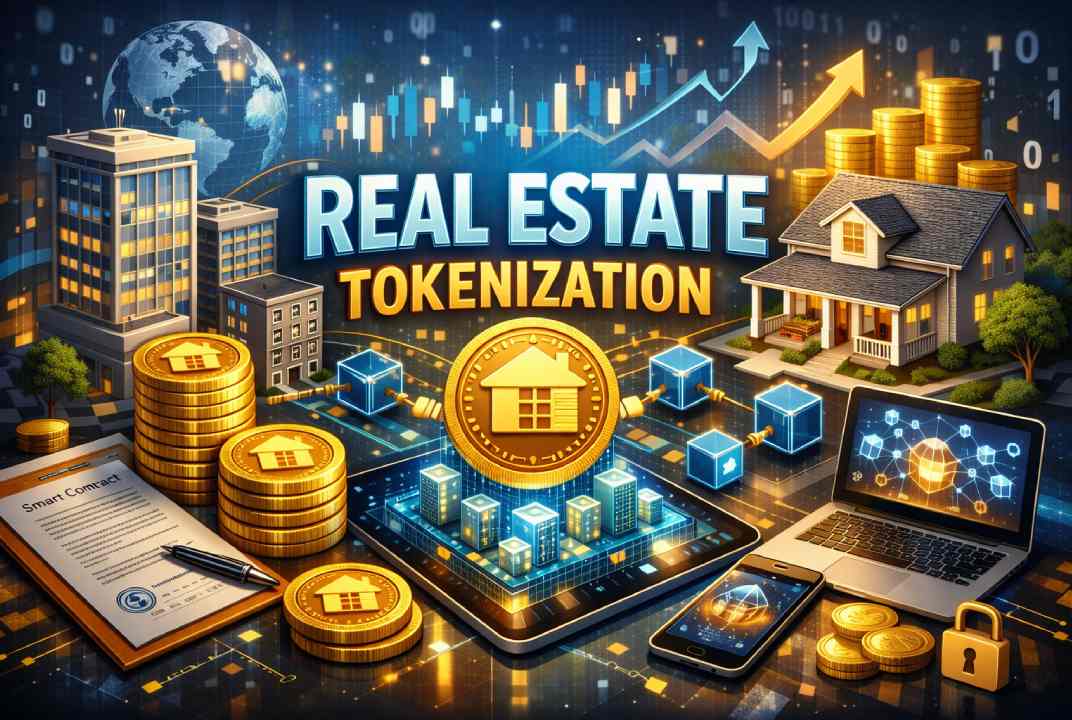
The real estate industry has traditionally been characterized by high entry barriers, complex ownership structures, and limited liquidity. Large capital requirements and lengthy transactional processes have made property investment largely inaccessible to smaller investors. However, the advent of blockchain technology and tokenization is transforming the way people invest in real estate.
Real estate tokenization allows properties to be divided into digital tokens, each representing fractional ownership. These tokens are recorded on blockchain networks, providing transparency, security, and efficiency. By leveraging fractional ownership and smart contracts, investors can participate in property markets with smaller capital commitments, faster transactions, and greater flexibility. In 2026, real estate tokenization is emerging as a mainstream investment model, enabling both retail and institutional investors to access previously exclusive property markets.
Understanding Real Estate Tokenization
Real estate tokenization involves converting a physical property or a pool of properties into digital tokens that can be bought, sold, and traded on blockchain-based platforms. Each token represents a defined share of ownership, revenue rights, or other economic benefits associated with the property.
There are typically two primary types of real estate tokens: equity-backed and revenue-backed. Equity-backed tokens represent a proportional share of ownership in the property and the potential for long-term appreciation. Revenue-backed tokens provide holders with a share of rental income or other revenue streams generated by the property. Some tokenization platforms offer hybrid models that combine both equity and revenue benefits. By digitizing property ownership, tokenization reduces administrative overhead, eliminates intermediaries, and provides a secure, verifiable record of ownership through blockchain technology.
How Fractional Ownership Works
Fractional ownership is at the core of real estate tokenization. Traditional property investment often requires acquiring entire units or properties, making it challenging for smaller investors to participate. Fractional ownership divides a property into multiple tokens, allowing investors to purchase smaller stakes.
For example, a commercial office building valued at $10 million could be tokenized into 10,000 tokens, each worth $1,000. An investor purchasing 50 tokens would own 0.5% of the building and be entitled to a proportional share of rental income or capital appreciation.
This model enables broader investor participation, increased liquidity, and the ability to diversify across multiple properties or geographic locations without large capital outlays.
Benefits of Real Estate Tokenization
1. Accessibility and Inclusivity
Tokenization opens property investment to a wider audience. Retail investors who previously lacked the capital to participate in high-value real estate projects can now access fractional ownership opportunities. This democratization allows individuals and smaller institutions to diversify their portfolios with lower entry thresholds.
2. Liquidity and Market Flexibility
Unlike traditional real estate, which often requires months to sell, tokenized properties can be traded on digital marketplaces. Investors can buy or sell their tokens with greater speed, creating a more dynamic and liquid property market. This liquidity reduces the time and capital lock-in associated with traditional real estate investment.
3. Transparency and Security
Blockchain technology ensures that ownership records are transparent and immutable. Smart contracts automate processes such as dividend distribution, property management reporting, and ownership transfers, reducing reliance on intermediaries and minimizing the risk of fraud.
4. Efficient Portfolio Management
Tokenization platforms provide investors with dashboards to monitor holdings, track income, and evaluate portfolio performance. Automated reporting simplifies accounting, compliance, and auditing, streamlining property investment management for both individual and institutional investors.
Investment Opportunities Through Tokenization
Residential Properties
Residential real estate, including apartments, condominiums, and single-family homes, can be tokenized to allow fractional ownership. Investors gain exposure to rental income and potential property appreciation, often with lower capital requirements compared to traditional ownership.
Commercial Real Estate
Commercial office buildings, retail spaces, and industrial warehouses are prime candidates for tokenization. Fractional investment enables institutional investors and high-net-worth individuals to participate in large-scale commercial projects without the need to acquire entire properties.
Real Estate Investment Trusts (REITs)
Tokenizing existing REITs enhances accessibility and liquidity. Investors can purchase digital tokens representing shares in a diversified real estate portfolio, benefiting from both income and appreciation while enjoying more flexible trading options compared to traditional REIT structures.
How Blockchain Simplifies Transactions
Blockchain technology underpins the efficiency of tokenized real estate by providing a decentralized and secure ledger for ownership and transactions. Smart contracts facilitate automated execution of agreements, ensuring timely payments, accurate ownership records, and compliance with legal frameworks.
For instance, rental income or property revenue can be distributed automatically to token holders according to predefined rules, reducing administrative delays and errors. Ownership transfers occur on-chain, minimizing the need for complex legal processes and third-party intermediaries.
Risk Considerations
While tokenization presents numerous advantages, investors should remain aware of potential risks. Regulatory frameworks vary across jurisdictions, and compliance with securities laws is essential. Market volatility, property valuation risks, and platform security must also be carefully evaluated.
Investors should conduct thorough due diligence on tokenization platforms, underlying properties, and legal structures before committing capital. Regulatory-compliant platforms with transparent reporting and secure smart contract infrastructure mitigate many common risks.
The Future of Real Estate Investment
By 2026, tokenized real estate is expected to become a mainstream investment option. The combination of fractional ownership, blockchain security, and digital marketplaces is reshaping the property investment landscape. As adoption grows, tokenization is likely to integrate with decentralized finance (DeFi) platforms, enabling automated lending, borrowing, and trading of property-backed tokens. Cross-border investments will become simpler, and investors will gain access to global real estate markets without traditional geographic or administrative barriers. Fractional ownership and blockchain-based platforms will also encourage more efficient property management and transparent reporting, creating a more investor-friendly environment.
Conclusion
Real estate tokenization simplifies property investment by combining blockchain technology with fractional ownership. By lowering entry barriers, enhancing liquidity, and automating processes, tokenized real estate creates new opportunities for both retail and institutional investors. Fractional ownership allows investors to diversify portfolios, gain exposure to high-value assets, and participate in global real estate markets. Blockchain ensures transparency, security, and efficiency, while digital marketplaces facilitate trading and portfolio management. As the real estate sector continues to embrace tokenization, investors who adopt this approach early will benefit from a more flexible, liquid, and inclusive property investment ecosystem. Real estate tokenization is not just a technological innovation—it represents a strategic evolution in how people access, invest in, and benefit from real estate assets worldwide.