

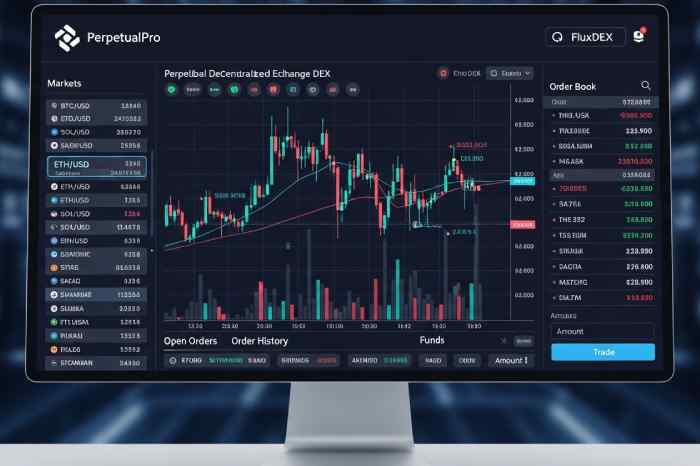
Perpetual decentralized exchanges (DEXs) are rapidly transforming the global trading ecosystem by merging the advanced mechanics of derivatives markets with the transparency and autonomy of blockchain technology. Unlike traditional crypto spot trading, perpetual trading enables users to speculate on price movements without owning the underlying asset, while removing expiration dates a key feature that has significantly accelerated adoption. As decentralized finance (DeFi) continues to evolve, there is a clear shift toward non-custodial platforms that allow traders to access leverage without relinquishing control of their funds. This transition has been further reinforced by repeated security breaches and trust issues associated with centralized exchanges, prompting both retail and institutional participants to seek safer, trustless alternatives.
The growing appeal of perpetual DEXs lies in their ability to offer high-leverage trading within a permissionless and transparent environment. Users maintain full custody of their assets, benefit from on-chain visibility, and eliminate counterparty risks, all while accessing sophisticated trading tools. At the same time, these platforms are attracting a new generation of crypto participants who demand both performance and security. With billions of dollars already locked in DeFi protocols, perpetual DEXs are emerging as a foundational pillar of the ecosystem. This makes them particularly relevant for entrepreneurs, developers, and fintech strategists looking to build, invest, or scale in the next phase of decentralized trading innovation.
Understanding the Core of Perpetual DEX Platforms
What Is a Perpetual DEX?
At their core, perpetual DEXs operate through sophisticated smart contract systems that replicate traditional derivatives infrastructure. Perpetual futures differ from standard futures contracts by having no expiration date; instead, they rely on a funding rate mechanism to keep contract prices aligned with spot markets. When prices diverge, periodic payments between long and short positions incentivize balance, ensuring market stability.
Key Components That Power a Perpetual DEX
The underlying architecture of a perpetual DEX includes several critical components that work together seamlessly:
- Smart contracts that automate trade execution, margin management, and settlements
- Liquidity systems, either through pooled assets (AMMs) or direct matching (order books)
- Oracle networks that provide accurate, real-time pricing data
- Margin and liquidation engines that manage risk and maintain solvency
Each of these elements must function with precision to ensure a secure and efficient trading environment.
Types of Perpetual DEX Architectures
Perpetual DEX platforms are not built on a one-size-fits-all model. Instead, they typically fall into three architectural categories:
- AMM-based exchanges that use liquidity pools to facilitate trades without direct counterparties
- Order book-based systems that replicate traditional exchange mechanics in a decentralized setting
- Hybrid models that combine the liquidity depth of order books with the efficiency of AMMs
These evolving architectures reflect the industry’s ongoing effort to balance decentralization with performance, ultimately delivering a user experience that can compete with centralized exchanges.
Market Opportunity and Business Potential
Rising Investment and Revenue Potential in Perpetual DEXs
The rapid expansion of decentralized finance has created a fertile environment for perpetual DEX platforms to thrive, positioning them as one of the most lucrative segments within the broader crypto economy. Entrepreneurs are increasingly drawn to this space due to its strong revenue potential and scalability. With decentralized trading volumes reaching billions of dollars daily, perpetual DEXs benefit from multiple income streams, including trading fees, spreads, and funding rate mechanisms that continuously generate value as user activity grows. At the same time, the global shift toward permissionless financial systems is accelerating demand, as users seek platforms that eliminate intermediaries and provide unrestricted access to leveraged trading.
Diverse User Segments Driving Adoption
The user base of perpetual DEXs is both diverse and strategically important. Retail traders value autonomy and security, preferring non-custodial environments where they retain full control over their funds. Meanwhile, institutional investors and funds are exploring DeFi as a complementary avenue for yield generation and portfolio diversification, particularly as infrastructure becomes more robust and compliance frameworks evolve. Additionally, arbitrageurs and high-frequency traders play a crucial role in maintaining market efficiency by exploiting price discrepancies across platforms.
Competitive Landscape and Untapped Opportunities
Despite growing competition, the market still presents significant opportunities. Many existing platforms struggle with issues such as limited liquidity, complex user interfaces, and latency challenges. New entrants can gain a competitive edge by focusing on performance optimization, cross-chain compatibility, and user-centric innovation, thereby addressing current inefficiencies while capturing unmet demand.
Essential Features for a Successful Perpetual DEX
User Experience That Drives Engagement and Retention
A successful perpetual DEX is defined not only by its technical foundation but also by the quality of its user experience and feature set. The trading interface must be intuitive enough for beginners while offering the depth and precision required by professional traders. Real-time charting, advanced analytics, and seamless wallet connectivity are essential components that enhance usability and drive long-term engagement.
Advanced Trading Capabilities for Modern Traders
As users become more sophisticated, the demand for advanced trading functionalities continues to grow. Features such as cross-margin and isolated margin modes allow traders to manage risk more effectively, while adjustable leverage provides flexibility in strategy execution. Integrated dashboards that display critical metrics like margin ratios, liquidation thresholds, and profit-and-loss data further empower users to make informed decisions in volatile markets.
Security, Reliability, and Risk Control
Equally critical is the platform’s approach to security and reliability. Given the irreversible nature of blockchain transactions, perpetual DEXs must prioritize robust smart contract development, comprehensive audits, and continuous vulnerability testing through bug bounty programs. Mechanisms to prevent price manipulation and ensure accurate market data—typically through reliable oracle integrations—are vital for maintaining trust. In parallel, efficient liquidation systems must be in place to handle extreme market conditions without destabilizing the platform.
Liquidity and Performance as Growth Drivers
Liquidity and performance optimization play a central role in success. Deep liquidity ensures tighter spreads and reduced slippage, while high-throughput infrastructure enables faster trade execution and lower transaction costs. By combining strong security practices, advanced trading tools, and high-performance architecture, a perpetual DEX can deliver a seamless and competitive trading experience that rivals even the most established centralized platforms.
Technology Stack and Development Framework
Building on the Right Blockchain Foundation
The success of a perpetual DEX heavily depends on selecting the appropriate blockchain infrastructure, as it directly impacts performance, cost efficiency, and scalability. Developers must carefully evaluate Layer 1 and Layer 2 solutions, balancing decentralization with execution speed. While Layer 1 networks offer stronger security and decentralization, they often struggle with high gas fees and limited throughput during peak demand. In contrast, Layer 2 solutions provide faster transaction speeds and significantly reduced costs, making them more suitable for high-frequency trading environments. The key lies in aligning infrastructure choices with the platform’s target audience and trading volume expectations.
Smart Contract Development and Security Standards
Smart contracts form the backbone of any perpetual DEX, governing trade execution, margin calculations, and liquidation processes. Writing secure and efficient contracts is non-negotiable, as even minor vulnerabilities can lead to significant financial losses. Best practices include modular contract design, rigorous code reviews, and adherence to established security standards. Equally important is a comprehensive testing and auditing process, involving unit tests, simulation of edge cases, and third-party security audits. Continuous monitoring and iterative upgrades ensure that the platform remains resilient in a rapidly evolving threat landscape.
Backend and Frontend Engineering Excellence
Beyond smart contracts, a robust backend infrastructure is essential for handling data processing, order matching (in hybrid models), and user interactions. Scalability and low latency are critical, especially during periods of high market volatility. On the frontend, user experience plays a decisive role in adoption. A clean, intuitive interface combined with fast load times and real-time updates enhances usability and keeps traders engaged. Seamless wallet integration and cross-device compatibility further contribute to a frictionless trading experience.
Oracle Integration and Data Accuracy
Reliable price data is fundamental to the integrity of a perpetual DEX. Oracles act as bridges between on-chain systems and real-world market data, ensuring accurate pricing for trade execution and liquidation triggers. Selecting trustworthy oracle providers and implementing redundancy mechanisms can prevent manipulation and data discrepancies. High-quality data feeds not only protect users but also reinforce platform credibility in a competitive market.
Step-by-Step Development Process
Strategic Planning and Requirement Analysis
Developing a perpetual DEX begins with a clear understanding of business objectives and technical requirements. This stage involves defining the platform’s value proposition, identifying target users, and outlining core functionalities. A well-structured product roadmap serves as a blueprint, guiding development priorities and ensuring alignment between business and technical teams.
Designing a Scalable and Efficient Architecture
The architecture phase translates ideas into actionable system designs. Workflow diagrams and technical blueprints help visualize how different components—such as smart contracts, liquidity mechanisms, and user interfaces—interact with one another. A critical decision at this stage is whether to adopt a fully non-custodial model or incorporate hybrid elements to enhance performance and usability.
Development and Comprehensive Testing
The development phase typically follows an agile methodology, allowing teams to iterate quickly and adapt to feedback. Smart contracts, backend systems, and frontend interfaces are built in parallel, with continuous integration ensuring seamless functionality. Rigorous testing is essential, including unit testing for individual components, integration testing for system-wide performance, and stress testing to evaluate behavior under extreme conditions. This multi-layered approach minimizes risks and ensures reliability at scale.
Deployment and Launch Strategy
A successful launch requires careful execution and community involvement. Initial deployment on a testnet allows developers to identify bugs, gather user feedback, and refine the platform before going live. Engaging early adopters during this phase can help build momentum and trust. Once the platform is stable, mainnet deployment marks the official launch, supported by marketing efforts, liquidity incentives, and strategic partnerships to drive adoption and long-term growth.
Legal, Compliance, and Risk Considerations
Navigating Regulatory Complexity in a Decentralized World
Operating a perpetual DEX requires careful navigation of an increasingly evolving regulatory landscape. While decentralization offers a degree of operational flexibility, it does not eliminate legal exposure. Different jurisdictions impose varying requirements on derivatives trading, digital assets, and financial services, making compliance a strategic necessity rather than an afterthought. Founders must evaluate where their platform operates, who it serves, and how regulators in those regions interpret decentralized systems. In some cases, implementing selective compliance measures such as geo-blocking or limited onboarding restrictions may be required to mitigate legal risks.
KYC (Know Your Customer) and AML (Anti-Money Laundering) frameworks remain a complex challenge for decentralized platforms. While many DEXs aim to preserve anonymity, hybrid approaches are emerging, where optional or tiered identity verification balances compliance with user privacy. This evolving middle ground allows platforms to attract institutional participants while maintaining accessibility for retail users.
Risk Management and Platform Integrity
Beyond regulatory concerns, managing financial and technical risks is critical for long-term sustainability. Market volatility is inherent in leveraged trading, and without proper safeguards, it can lead to cascading liquidations and systemic instability. Effective risk management mechanisms—such as dynamic margin requirements, real-time monitoring systems, and circuit breakers—help maintain equilibrium during extreme market conditions.
Smart contract vulnerabilities represent another significant risk vector. Even well-audited systems can be exposed to unforeseen exploits, making continuous security assessments essential. Incorporating insurance funds and emergency shutdown mechanisms can further protect users and reinforce platform resilience.
Building Trust Through Transparency and Governance
Trust is a foundational pillar in decentralized ecosystems. Open-source development practices allow the community to audit code, identify vulnerabilities, and contribute to improvements. This transparency not only enhances security but also strengthens user confidence. Additionally, community governance models—often structured as decentralized autonomous organizations (DAOs)—empower token holders to participate in decision-making processes. This inclusive approach fosters long-term engagement and aligns platform evolution with user interests.
Tokenomics and Incentive Design
Crafting a Sustainable Token Economy
Tokenomics plays a central role in the growth and sustainability of a perpetual DEX. A well-designed token economy typically includes both utility and governance functions, enabling users to access platform features while also participating in strategic decisions. Utility tokens may be used for fee discounts, staking, or collateral, while governance tokens grant voting rights on protocol upgrades and policy changes. The challenge lies in designing a system that encourages participation without leading to excessive inflation or short-term speculation.
Token distribution strategies must also be carefully planned to ensure fairness and long-term alignment. Allocating tokens across developers, early investors, community members, and liquidity providers requires a balance between rewarding early contributors and maintaining decentralization.
Driving Participation Through Incentives
To bootstrap and sustain ecosystem growth, perpetual DEXs rely heavily on incentive mechanisms. Traders can be rewarded through fee rebates or trading competitions, while liquidity providers often receive yield incentives in the form of token emissions. Referral programs further accelerate user acquisition by leveraging network effects, encouraging existing users to onboard new participants.
Staking mechanisms add another layer of engagement, allowing users to lock tokens in exchange for rewards or governance privileges. These incentives not only drive activity but also create a sense of ownership within the community.
Ensuring Long-Term Value and Growth Alignment
Sustainable growth depends on aligning incentives across all stakeholders. This requires a careful balance between token supply and demand, ensuring that inflationary rewards do not dilute long-term value. Mechanisms such as token burns, vesting schedules, and performance-based emissions can help maintain equilibrium.
Ultimately, the most successful perpetual DEXs are those that design token economies with longevity in mind—prioritizing ecosystem health, user retention, and continuous innovation over short-term gains.
Growth Strategies for Scaling Your Perpetual DEX
Building Early Traction and Market Presence
Scaling a perpetual DEX begins with establishing strong early traction, which is often driven by an engaged and loyal community. In the decentralized ecosystem, community is not just an audience—it is a growth engine. Successful platforms invest heavily in building active communities across forums, social platforms, and developer ecosystems, fostering trust and encouraging user participation from the outset. Early adopters often play a dual role as both users and advocates, helping to amplify reach organically.
Strategic partnerships further accelerate this process. Collaborations with liquidity providers, blockchain networks, wallet providers, and other DeFi protocols can significantly enhance visibility and usability. These alliances create network effects, enabling seamless integrations and expanding the platform’s reach across multiple ecosystems.
High-Impact Marketing Channels for User Acquisition
To drive sustained adoption, perpetual DEXs must leverage targeted and value-driven marketing strategies. Content marketing plays a crucial role in educating users about complex trading concepts while positioning the platform as an authority in the space. High-quality blogs, research reports, and educational resources not only attract users but also build long-term credibility.
In parallel, influencer collaborations and social media campaigns help tap into existing crypto communities, accelerating awareness and onboarding. Platforms that successfully combine technical credibility with strong brand storytelling are better positioned to stand out in a crowded market.
Retention, Engagement, and User Loyalty
Acquiring users is only the first step; retaining them requires continuous engagement and value delivery. Gamification strategies—such as trading competitions, leaderboards, and reward-based challenges—encourage active participation and create a sense of excitement. These mechanisms can significantly increase trading volume while strengthening user loyalty.
Regular feature upgrades and performance enhancements are equally important. As user expectations evolve, platforms must continuously innovate, introducing new trading pairs, advanced tools, and improved interfaces. This commitment to ongoing development not only retains existing users but also attracts new ones through word-of-mouth and community advocacy.
Monetization Models and Revenue Streams
Core Revenue Drivers of Perpetual DEXs
Perpetual DEXs are inherently designed to generate consistent and scalable revenue. The primary income streams include trading fees, which are charged on every transaction, and bid-ask spreads that capture value from market activity. Additionally, funding rate differentials—periodic payments exchanged between long and short positions—create another layer of monetization that is unique to perpetual trading systems.
These revenue channels are directly tied to platform usage, making user growth and trading volume critical to financial success. As liquidity deepens and user activity increases, these streams can scale significantly without requiring proportional increases in operational costs.
Expanding Revenue Through Value-Added Services
Beyond core trading revenues, perpetual DEXs can unlock additional monetization opportunities by offering premium services. Advanced analytics tools, enhanced charting capabilities, and institutional-grade dashboards can be packaged as subscription-based offerings for professional traders.
Furthermore, providing API access enables institutional users, trading firms, and developers to integrate with the platform, opening up new revenue streams while expanding the ecosystem. These value-added services not only diversify income but also strengthen the platform’s positioning as a comprehensive trading solution.
Profitability Without Compromising User Experience
While monetization is essential, maintaining a competitive and user-friendly environment is equally critical. Excessive fees can drive users to alternative platforms, making it important to strike a balance between profitability and affordability. Transparent pricing models, where users clearly understand the costs associated with trading, help build trust and reduce friction.
Ultimately, the most successful perpetual DEXs are those that align their revenue strategies with user value ensuring that monetization enhances, rather than detracts from, the overall trading experience.
Conclusion
The evolution of perpetual DEXs marks a significant shift in how modern financial markets operate, blending decentralization, transparency, and advanced trading capabilities into a single ecosystem. From robust technology infrastructure and secure smart contract design to strategic growth, compliance, and monetization frameworks, building a successful platform requires a holistic and forward-thinking approach. As competition intensifies and user expectations rise, platforms that prioritize performance, security, and user-centric innovation will emerge as market leaders. Ultimately, businesses that invest in Crypto Perpetual Exchange Development with a strong foundation in scalability, trust, and sustainable tokenomics will be best positioned to capture long-term value and drive the future of decentralized trading.