

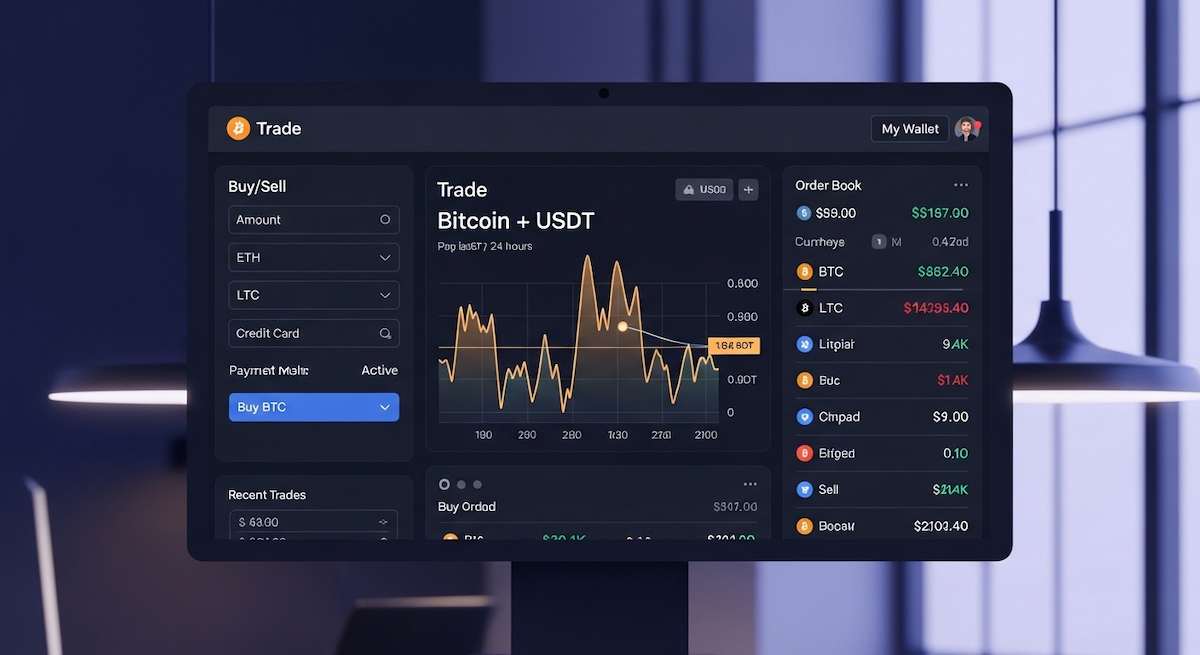
The cryptocurrency trading landscape has undergone a fundamental transformation over the past few years, driven by the rapid maturation of decentralized finance (DeFi). What began as a niche alternative to centralized exchanges has evolved into a robust ecosystem where users demand greater control, transparency, and accessibility. One of the most significant developments within this shift is the rise of decentralized derivatives, particularly perpetual futures trading. Unlike traditional spot markets, perpetual contracts allow traders to speculate on price movements without owning the underlying asset, making them highly attractive for both hedging and leveraged trading strategies.
Centralized exchanges once dominated this space due to their superior liquidity and user-friendly interfaces. However, concerns around custodial risk, regulatory crackdowns, and lack of transparency have gradually eroded their monopoly. High-profile exchange failures have further accelerated the migration toward decentralized platforms where users retain custody of their assets. In this context, white label perpetual DEX solutions have emerged as a strategic shortcut for businesses looking to enter the market quickly. Instead of investing years in development, companies can deploy proven infrastructure, customize it to their brand, and capitalize on the growing demand for decentralized derivatives trading with significantly reduced risk and cost.
Understanding Perpetual DEX Platforms in Simple Terms
At its core, a perpetual decentralized exchange (DEX) is a blockchain-based platform that enables users to trade perpetual contracts without intermediaries. Unlike traditional futures contracts, which have expiration dates, perpetual contracts remain open indefinitely, relying on a mechanism called the funding rate to keep prices aligned with the underlying asset. This mechanism incentivizes traders to balance long and short positions, ensuring market stability.
Key features such as leverage allow traders to amplify their positions, while decentralized liquidity pools or market makers ensure continuous trading activity. The appeal of DEX-based derivatives lies in their transparency, non-custodial nature, and global accessibility. Traders are no longer bound by geographic restrictions or dependent on centralized entities, making perpetual DEX platforms an increasingly preferred choice in modern crypto trading.
Understanding White Label Crypto Infrastructure and Its Market Timing Advantage
What White Label Means in the Crypto Trading Ecosystem
In the rapidly evolving digital asset industry, a white label solution refers to a fully developed trading infrastructure that businesses can rebrand and operate as their own. Instead of investing years into building a decentralized exchange or derivatives platform from the ground up, companies can adopt a pre-built system that already includes core components such as trading engines, wallet integrations, liquidity routing, and smart contract architecture. This allows businesses to focus on branding, user acquisition, and market strategy rather than heavy backend development. In the context of perpetual decentralized exchanges, this model is particularly powerful because it enables firms to enter a highly competitive derivatives market without needing deep blockchain engineering capabilities.
Build vs. Buy: The Strategic Trade-Off
The decision between building a custom platform and adopting a white label solution is fundamentally a trade-off between control and speed. A fully custom exchange may offer maximum flexibility, but it often requires 12–24 months of development, significant capital investment, and ongoing security audits. On the other hand, a white label perpetual DEX significantly shortens this timeline by providing a production-ready foundation. Businesses essentially “buy time to market,” which is often more valuable than building every component internally. This is especially important in crypto markets where early liquidity capture often determines long-term dominance.
Why Timing Matters in the Current Market Cycle
The decentralized finance ecosystem continues to expand as users increasingly prefer self-custody trading platforms that eliminate reliance on centralized intermediaries. Even during volatile market cycles, decentralized derivatives trading has shown consistent demand, driven by both retail traders seeking leverage opportunities and institutional participants exploring on-chain exposure. At the same time, many regional markets remain underdeveloped, leaving significant gaps for new entrants. This combination of rising demand and fragmented competition creates a strategic window where fast deployment through white label infrastructure becomes a decisive advantage.
Key Strategic Advantages of White Label Perpetual DEX Platforms
Faster Time-to-Market: Capturing Opportunities Before Competitors
Speed is one of the most critical success factors in crypto infrastructure deployment. White label perpetual DEX platforms allow businesses to launch within weeks rather than spending years on development cycles. Since core components such as order matching engines, smart contracts, and trading interfaces are already tested, companies can bypass lengthy engineering phases. This rapid deployment enables first-mover advantage, especially in emerging regions where early liquidity providers often dominate market share before competitors arrive.
Cost Efficiency: Reducing Capital Burn Without Sacrificing Quality
Developing a decentralized exchange from scratch requires substantial financial investment in engineering teams, security audits, infrastructure scaling, and ongoing maintenance. White label solutions convert these unpredictable costs into a structured pricing model, often through licensing or subscription-based arrangements. This allows businesses to allocate more resources toward growth strategies such as marketing, partnerships, and community building, rather than spending heavily on backend development. The result is a more efficient capital structure with lower operational risk.
Built-In Liquidity and Trading Engine: Ensuring Market Depth from Day One
Liquidity is the backbone of any trading platform, and without it, even the most advanced exchange cannot retain users. White label perpetual DEX solutions often integrate with liquidity providers or use synthetic liquidity mechanisms to ensure smooth trade execution from the moment of launch. This reduces slippage, improves order fulfillment speed, and enhances user trust. By eliminating the need to bootstrap liquidity from scratch, businesses can immediately offer a competitive trading experience.
Scalability: Building for Long-Term Expansion
Modern white label platforms are designed with modular architecture, allowing businesses to scale features as demand grows. This includes adding new trading pairs, supporting higher leverage options, and integrating multiple blockchain networks. Multi-chain compatibility is particularly important in today’s fragmented blockchain environment, where liquidity exists across various ecosystems. As user bases expand, platforms can upgrade without rebuilding core systems, ensuring sustainable long-term growth.
Enhanced Security and Reliability: Reducing Technical and Financial Risk
Security remains one of the most critical concerns in decentralized finance. White label perpetual DEX platforms typically undergo rigorous smart contract audits and are built on proven infrastructure frameworks. This significantly reduces the likelihood of vulnerabilities compared to newly developed systems. Additionally, continuous updates and professional maintenance ensure that the platform remains stable even under high trading volumes or volatile market conditions, reinforcing user confidence and long-term credibility.
Customization Capabilities That Strengthen Your Brand Identity
Full Control Over UI/UX Design for Market Differentiation
One of the most powerful advantages of a white label perpetual DEX platform is the ability to fully customize the user interface and experience without touching the underlying protocol. Businesses can design trading dashboards, order books, and portfolio views that reflect their brand personality and user expectations. In a competitive market where traders often choose platforms based on usability and speed, a clean and intuitive interface can significantly improve retention. For example, platforms targeting professional traders may prioritize dense data layouts and advanced charting tools, while retail-focused exchanges may emphasize simplicity and guided onboarding.
Tailored Trading Features for Specific User Segments
White label solutions are not one-size-fits-all; they can be configured to match different trading audiences. A platform aimed at high-frequency traders might include advanced order types, lower latency execution, and deeper leverage options. Conversely, platforms targeting beginners may focus on simplified perpetual trading interfaces and built-in risk warnings. This adaptability allows businesses to carve out niche positioning in an otherwise crowded derivatives market, making it easier to attract and retain a clearly defined user base.
Multi-Language and Regional Adaptability
Global crypto adoption demands localization, and white label platforms make it easier to expand into multiple regions quickly. Multi-language support ensures accessibility for users across different geographies, while regional customization enables compliance with local trading preferences and regulatory expectations. This flexibility is especially valuable in emerging markets across Asia, Latin America, and the Middle East, where localized user experience often determines platform success more than advanced technical features alone.
Branding Elements That Build Trust and Recognition
Beyond functionality, branding plays a crucial role in user trust. White label platforms allow full customization of logos, color schemes, domain structure, and communication tone, enabling businesses to build a strong identity from day one. In the crypto industry, where trust is often fragile, consistent branding across web, mobile, and support channels helps establish credibility and long-term user loyalty.
Revenue Streams You Can Unlock with a Perpetual DEX Model
Trading Fees and Commissions: The Core Revenue Engine
The most fundamental revenue stream in any exchange model comes from trading fees. White label perpetual DEX platforms typically support maker and taker fee structures, allowing businesses to earn revenue on every executed trade. Maker fees incentivize liquidity provision, while taker fees generate immediate income from market execution. Additionally, volume-based incentives can be implemented to attract high-frequency traders and institutional participants, further increasing platform liquidity and fee generation potential.
Funding Rate Earnings: Continuous Income from Market Imbalance
Perpetual contracts introduce a unique mechanism known as funding rates, which balance long and short positions in the market. Depending on market conditions, traders either pay or receive funding fees periodically. Platforms can capture a portion of these flows, creating a steady income stream independent of trading volume spikes. This mechanism ensures that revenue is not solely dependent on transaction frequency but also on open interest and market positioning.
Token Listing and Strategic Partnerships
As the platform grows, listing new tokens becomes another monetization avenue. Projects seeking visibility and liquidity often pay listing fees or enter revenue-sharing agreements with exchanges. Beyond listings, strategic partnerships with DeFi protocols, liquidity providers, and blockchain ecosystems can generate additional income streams while enhancing platform credibility. These collaborations also help attract new users and expand ecosystem reach.
Premium Features and VIP Trading Models
Many advanced trading platforms introduce subscription-based models or VIP tiers to monetize power users. These premium offerings may include reduced trading fees, higher leverage limits, priority execution, advanced analytics, or exclusive market insights. Institutional clients may also pay for API access or dedicated infrastructure support. This tiered model ensures that revenue scales with user sophistication and trading volume.
Essential Technical Features to Evaluate in a White Label Solution
Advanced Order Types and Flexible Leverage Systems
A strong white label perpetual DEX must support a wide range of order types, including limit, market, stop-loss, and conditional orders. These features allow traders to execute complex strategies and manage risk effectively. Leverage options should also be configurable, enabling platforms to serve both conservative and high-risk trading segments without compromising system stability.
Cross-Margin and Isolated Margin Support for Risk Management
Modern traders demand flexibility in how they manage capital across positions. Cross-margin allows users to share collateral across multiple trades, optimizing capital efficiency, while isolated margin limits risk exposure to individual positions. A robust white label solution should support both models to accommodate different trading strategies and risk preferences.
Real-Time Analytics and Performance Dashboards
Data transparency is critical for user engagement and trust. Platforms should provide real-time analytics including open interest, liquidation levels, funding rates, and trading volume metrics. These dashboards not only enhance user decision-making but also strengthen platform credibility by offering full visibility into market dynamics.
Wallet Integrations and Secure Custody Solutions
Seamless wallet connectivity is essential in decentralized trading environments. White label platforms must support multiple wallet integrations and ensure secure custody mechanisms, whether non-custodial or hybrid models are used. This ensures users maintain control over their assets while interacting smoothly with the trading interface.
API Access for Institutional and Algorithmic Traders
Institutional adoption is increasingly driven by API accessibility. A strong white label solution should offer low-latency, well-documented APIs that enable algorithmic trading, portfolio automation, and third-party integrations. This not only expands the platform’s user base but also increases trading volume and overall ecosystem activity.
Essential Technical Features to Evaluate in a White Label Perpetual DEX Solution
Advanced Order Types and Flexible Leverage Architecture
A high-performance white label perpetual DEX must support a comprehensive suite of order types that enable both retail and professional trading strategies. This includes market orders for instant execution, limit orders for precision entry, stop-loss and take-profit mechanisms for risk control, and conditional orders for automated strategy execution. Equally important is a flexible leverage system that allows platforms to configure risk exposure based on their target audience. For instance, a retail-focused exchange may cap leverage at conservative levels, while a more advanced derivatives platform might offer higher leverage tiers for experienced traders. This configurability ensures the platform can adapt to different regulatory environments and user risk profiles without requiring core system changes.
Cross-Margin and Isolated Margin Support for Capital Efficiency
Modern derivatives traders expect sophisticated margining systems that balance flexibility with risk control. Cross-margin functionality allows users to share collateral across multiple positions, improving capital efficiency and reducing liquidation risk during market fluctuations. In contrast, isolated margin ensures that risk is contained within a single position, protecting the rest of the portfolio from adverse price movements. A robust white label solution should support both systems seamlessly, allowing users to switch between strategies depending on market conditions. This dual approach enhances trader satisfaction and positions the platform as a professional-grade trading environment.
Real-Time Analytics and Institutional-Grade Reporting
Transparency and data accessibility are critical for building trust in decentralized trading environments. A strong white label platform must include real-time analytics dashboards that display key market metrics such as open interest, funding rates, liquidation levels, trading volume, and liquidity depth. These insights help traders make informed decisions while also reinforcing the platform’s credibility. For institutional clients, advanced reporting tools that offer historical trade data, portfolio performance breakdowns, and risk exposure analysis are essential. These features elevate the platform beyond a simple exchange into a data-driven trading ecosystem.
Wallet Integrations and Secure Custody Infrastructure
Seamless wallet connectivity is a foundational requirement in decentralized finance. White label perpetual DEX platforms should support a wide range of wallet integrations, enabling users to connect and trade without friction. More importantly, custody architecture must prioritize security and user control, often through non-custodial or hybrid models where private keys remain with users. Some advanced platforms also incorporate multi-signature authorization and hardware wallet compatibility to further enhance asset protection. Strong wallet infrastructure not only improves usability but also builds long-term trust among traders who prioritize asset sovereignty.
API Access for Institutional and Algorithmic Trading
Institutional adoption of crypto derivatives is heavily dependent on robust API infrastructure. A white label solution should provide low-latency, well-documented APIs that allow algorithmic trading strategies, high-frequency execution, and third-party platform integrations. These APIs enable hedge funds, trading firms, and fintech applications to connect directly with the exchange ecosystem, significantly increasing trading volume and liquidity depth. Additionally, rate limits, uptime guarantees, and sandbox environments are critical for ensuring reliable institutional engagement and smooth integration testing.
Step-by-Step Process to Launch Your White Label Perpetual DEX Platform
Step 1: Defining Your Business Model and Target Market
The first stage of launching a white label perpetual DEX is clearly defining your business strategy. This includes identifying your target audience whether retail traders, professional derivatives users, or institutional clients—and determining your revenue model. Decisions around fee structures, leverage offerings, supported assets, and regional focus must be aligned with this initial strategy. A well-defined niche helps differentiate the platform in a highly competitive market and ensures that subsequent technical and marketing decisions remain focused and coherent.
Step 2: Selecting a Reliable White Label Technology Partner
Choosing the right white label provider is one of the most critical decisions in the entire launch process. Businesses must evaluate providers based on system reliability, smart contract security, scalability, liquidity integration capabilities, and historical performance. A strong partner should offer audited infrastructure, continuous updates, and technical support. Equally important is the provider’s ability to support customization, ensuring the platform can evolve alongside business needs rather than remaining rigid or limited in scope.
Step 3: Customizing Features, Branding, and User Experience
Once the technology foundation is selected, the next step involves tailoring the platform to reflect the brand identity. This includes UI/UX customization, logo integration, color schemes, and domain configuration. Beyond aesthetics, functional customization is equally important—such as adjusting leverage limits, enabling specific trading pairs, and configuring risk management rules. This stage transforms a generic trading engine into a unique market-facing product that aligns with the brand’s vision and target audience expectations.
Step 4: Testing, Security Validation, and Deployment
Before going live, rigorous testing is essential to ensure system stability and security. This includes stress testing under high trading volumes, simulating market volatility scenarios, and validating smart contract interactions. Security audits and penetration testing help identify vulnerabilities before launch. Once testing is complete, the platform is gradually deployed, often starting with a closed beta phase to gather user feedback and fine-tune performance before full-scale release.
Step 5: Marketing Strategy and User Acquisition Execution
After deployment, the focus shifts to growth. A successful launch requires a multi-channel marketing strategy that may include community building, influencer partnerships, liquidity incentives, referral programs, and targeted digital advertising. In the competitive crypto landscape, early liquidity attraction is crucial, as trading depth directly influences user retention. Strong onboarding experiences, educational content, and incentive-driven campaigns help accelerate adoption and establish market presence quickly.
Conclusion
In today’s fast-evolving digital asset landscape, launching a successful trading business requires speed, reliability, and strong market positioning. A White Label Perpetual Exchange Platform offers all three by enabling businesses to deploy a fully functional, customizable, and scalable derivatives trading ecosystem without the complexity of building from scratch. From reducing development costs and accelerating time-to-market to unlocking multiple revenue streams such as trading fees, funding rates, and premium services, this model empowers entrepreneurs to focus on growth rather than infrastructure challenges. As demand for decentralized and self-custody trading continues to rise globally, adopting a white label solution is no longer just a convenience it is a strategic advantage that can determine long-term competitiveness and success in the crypto derivatives market.