
When you invest in laboratory equipment, the lowest purchase price does not always deliver the best long-term value. A laminar flow hood must support your daily workflow, maintain the required clean working environment, and operate reliably without creating unnecessary maintenance expenses. To make a smart purchasing decision, you need to evaluate performance, operating costs, maintenance requirements, durability, and application suitability together. By looking beyond the initial price, you can choose equipment that supports consistent laboratory operations and delivers better value throughout its service life.
Evaluate Performance Against Your Laboratory Requirements
Before comparing prices, define what you expect your laminar flow hood to accomplish. Consider the materials you handle, the level of particulate control required, your available workspace, and the sensitivity of your procedures.
A suitable hood should provide the airflow characteristics and filtration performance required for your application. Evaluate the following specifications:
Airflow pattern: Determine whether a vertical or horizontal airflow configuration suits your process.
Filtration efficiency: Check the specified HEPA or other filtration system performance.
Working area: Confirm that the usable interior dimensions accommodate your equipment and materials.
Airflow uniformity: Review the manufacturer’s performance data and applicable testing criteria.
Noise levels: Consider whether operating noise could affect your laboratory environment.
Do not assume that two models with similar dimensions offer equivalent protection for your process. Compare documented specifications and testing results to understand the practical differences.
Calculate the Total Cost of Ownership
The purchase price represents only one part of your investment. A lower-priced unit may become more expensive if it requires frequent servicing, costly replacement filters, or additional electrical consumption.
Estimate the total cost of ownership over your expected service period. Include the following expenses:
- Initial equipment purchase and delivery
- Installation and commissioning
- Electricity consumption
- Filter inspection and replacement
- Preventive maintenance and repairs
- Performance verification and recertification, where applicable
- Staff downtime during maintenance
For example, compare two hoods over five years rather than evaluating their quoted prices alone. A more expensive model may offer better value if it has lower operating costs, readily available replacement components, and fewer disruptions. However, verify these advantages through specifications, warranty terms, and service estimates rather than assuming that a higher price guarantees better performance.
Compare Filtration Quality and Replacement Costs
Filtration is a major consideration when evaluating laboratory clean benches. Check the filter type, stated efficiency, replacement procedure, expected service conditions, and availability of compatible replacement filters.
Ask suppliers how filter performance is verified and whether they provide documentation for the supplied equipment. Also, establish the recommended inspection schedule and the conditions that may require earlier replacement.
Remember that a laminar flow hood is generally intended to protect the work or product from airborne particulate contamination. It should not automatically be treated as personnel protection against hazardous chemicals or infectious agents. Select a biological safety cabinet or suitable containment equipment when your application requires protection of personnel or the surrounding environment.
Assess Energy Efficiency and Daily Operating Expenses
Your hood may operate for several hours each day, making energy consumption an important part of long-term cost. Compare the electrical ratings of shortlisted models and estimate their annual energy use based on your laboratory’s operating schedule.
Use this formula:
Annual electricity cost = Power consumption (kW) × Operating hours per year × Electricity rate per kWh
For instance, a hood consuming 0.3 kW and operating for 2,000 hours annually uses approximately 600 kWh per year. Multiply that figure by your electricity tariff to estimate its annual electricity expense.
Also, consider whether the hood’s controls, lighting, and fan system suit your operating requirements. Evaluate energy use alongside airflow performance rather than choosing a model simply because it consumes less electricity.
Examine Construction Quality and Durability
The materials used in a laminar flow hood influence its suitability for your laboratory environment. Inspect the work surface, cabinet construction, accessible components, and resistance to the cleaning agents used in your facility.
When comparing models, ask about:
- Work-surface material and chemical compatibility
- Cabinet construction and finish quality
- Ease of cleaning and access to internal components
- Availability of replacement parts
- Expected service life under normal operating conditions
A durable unit can reduce repair frequency and replacement expenses. However, durability depends on construction, usage, cleaning practices, and maintenance. Request technical documentation and confirm that the equipment is appropriate for your working conditions.
Compare Maintenance Requirements and Technical Support
Maintenance can affect both your budget and your laboratory schedule. Before purchasing, find out how easily technicians can access filters, fans, electrical components, and other serviceable parts.
Ask suppliers whether they provide maintenance guidance, troubleshooting support, replacement components, and performance testing services. Confirm whether service is available in your region and whether any labor, travel, or inspection fees apply.
Review the warranty carefully. Compare its duration, covered components, exclusions, and requirements for maintaining coverage. A longer warranty is useful only when its terms address the risks that matter to your laboratory.
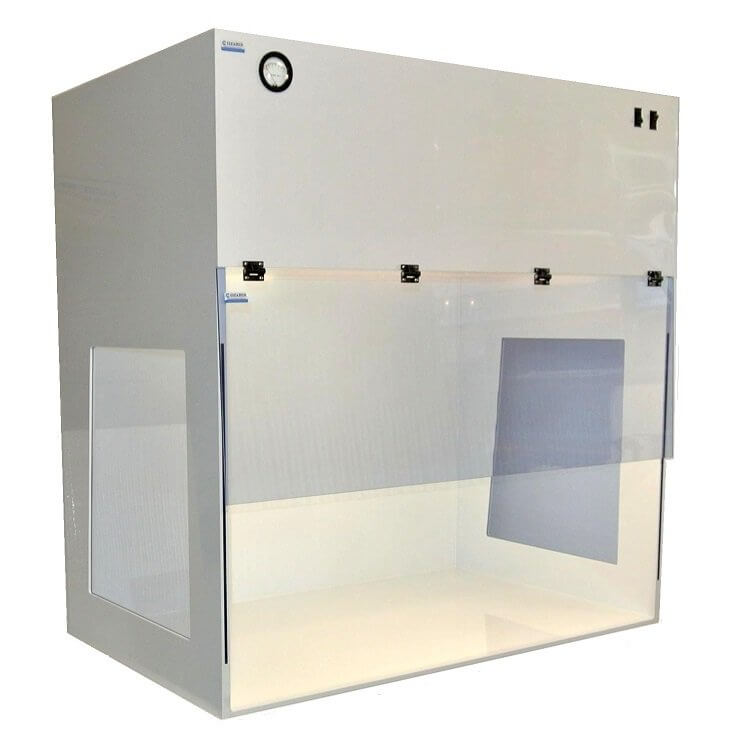
When evaluating a Laminar Flow Hood for Sale, compare the complete support package rather than relying on the advertised price alone. A supplier that provides clear specifications and accessible technical assistance can make ownership easier to manage.
Match the Hood Design to Your Workflow
The right equipment should fit your actual procedures. A hood that is too small can restrict movement, while an unnecessarily large unit may consume valuable bench space and increase operating expenses.
Consider these practical questions:
- Do you need a benchtop model or a freestanding unit?
- Will your process benefit more from horizontal or vertical airflow?
- Can operators comfortably reach materials inside the work area?
- Will instruments or other equipment obstruct airflow?
- Can the hood be positioned away from doors, windows, and other airflow disturbances?
Review the manufacturer’s installation requirements before finalizing your selection. Allow sufficient space for maintenance and ensure that the proposed location supports the intended airflow conditions.
Compare Suppliers Using a Consistent Checklist
A structured comparison makes purchasing decisions easier to justify. Request comparable quotations from suppliers and confirm that each quote covers the same essential features, accessories, delivery requirements, and services.
Use a simple scorecard to assess each model.
| Evaluation factor | What to compare |
| Purchase cost | Equipment, delivery, and installation |
| Performance | Airflow, filtration, and verification data |
| Operating cost | Electricity and routine expenses |
| Maintenance | Filter replacement, servicing, and parts |
| Durability | Materials, construction, and service life |
| Support | Warranty, technical assistance, and service access |
| Application fit | Dimensions, configuration, and workflow needs |
Assign weights according to your priorities. For example, a laboratory performing contamination-sensitive preparation may prioritize validated performance and application suitability over a small difference in purchase price.
Choose Long-Term Value With CleaTech LLC
Your final decision should balance performance, cost, usability, and ongoing support. Avoid selecting a hood based solely on a discount or a broad claim about reliability. Request technical specifications, clarify installation requirements, and compare the expected ownership costs before committing to a purchase.
Explore laboratory equipment options from CleaTech LLC to identify a laminar flow hood that aligns with your workspace and application requirements. Compare available configurations and ask for clarification whenever specifications or service terms are unclear.
If you need help evaluating suitable options, contact us today to discuss your requirements and identify the factors that matter most to your laboratory.
Frequently Asked Questions
1. What should you compare when buying a laminar flow hood?
Compare airflow configuration, filtration performance, working dimensions, energy consumption, maintenance costs, warranty coverage, and technical support. Evaluate these factors against your laboratory’s requirements to determine which model offers the best long-term value.
2. Is a more expensive laminar flow hood always better?
No. A higher price does not automatically mean better performance or durability. Review technical specifications, filtration data, construction quality, service availability, and total ownership costs before deciding which model provides the best value.
3. How do you calculate the total cost of a laminar flow hood?
Add the initial purchase price, shipping, installation, electricity, filter replacements, maintenance, repairs, and applicable performance testing costs over your expected ownership period. Comparing these expenses across models provides a more realistic basis for purchasing decisions.
4. How often should laminar flow hood filters be replaced?
Replacement frequency depends on the filter type, operating conditions, contamination loading, and manufacturer recommendations. Follow the specified inspection and testing schedule, and replace filters when their condition or performance indicates that replacement is necessary.
5. Where can you find a suitable laminar flow hood for sale?
You can explore the CleaTech laminar flow hood selection to compare available configurations. Review the specifications carefully and consult the supplier about your application, installation requirements, and ongoing maintenance needs.