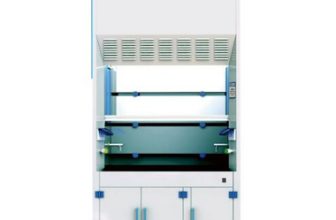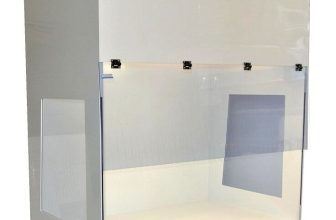


Relocating a laboratory requires careful planning to protect personnel, maintain experimental consistency, and meet safety requirements. If your laboratory uses volatile chemicals, corrosive reagents, or hazardous vapors, you need to evaluate your fume hood before moving it to a new facility. A portable chemical fume hood can offer flexibility, but its suitability depends on chemical compatibility, airflow performance, filtration requirements, and the conditions of your new workspace.
By assessing these factors early, you can select equipment that supports your laboratory’s changing needs without compromising chemical safety or operational efficiency.
Assess Your Chemical Handling Requirements
Before choosing a portable chemical fume hood, review the substances, quantities, and procedures involved in your daily operations. Relocation is an opportunity to confirm whether your existing equipment can handle your current chemical workload.
Create an inventory that identifies:
- Chemicals and reagents used during experiments.
- Potentially hazardous vapors and fumes generated.
- Typical chemical quantities and exposure risks.
- Operating temperatures and processes that release contaminants.
- Whether your work involves corrosive, toxic, or highly volatile substances.
These details help you determine the required hood design and appropriate containment strategy. For example, handling small quantities of certain solvents may require different controls from working with concentrated acids or highly reactive chemicals.
Never assume that a portable hood is suitable for every chemical. Confirm material compatibility and consult the manufacturer’s chemical resistance documentation before making a decision.
Evaluate Portability and Installation Requirements
A portable unit can simplify laboratory relocation because it may be easier to reposition than a fixed installation. However, portability should not be the only selection criterion.
Measure the available space in your new laboratory, including doorways, corridors, elevators, and access routes. Check the hood’s dimensions, weight, wheel configuration, and clearance requirements before transporting it.
You should also evaluate:
- Whether the unit fits your intended workstation.
- Whether locking casters or other stabilization features are provided.
- Whether the electrical supply matches the equipment specifications.
- Whether the unit requires an exhaust connection or dedicated ventilation.
- Whether the new location allows sufficient access for maintenance.
Remember that moving a hood does not automatically make it safe to operate in a different location. Have qualified personnel inspect the equipment, reconnect utilities where necessary, and verify performance before restarting chemical work.
Verify Airflow, Containment, and Filtration
Airflow performance is one of the most important considerations when evaluating a chemical fume hood. The unit must control hazardous contaminants under the conditions in which you intend to use it.
Determine whether the hood is ducted or ductless. A ducted hood removes contaminated air through an exhaust system, while a ductless model generally uses specified filters to capture or adsorb particular contaminants before returning air to the room.
For either design, verify the following:
- The manufacturer’s required airflow and operating conditions.
- Appropriate containment performance for your intended procedures.
- Filter compatibility with every relevant chemical vapor.
- Filter service life, replacement intervals, and breakthrough monitoring.
- Alarm functions and airflow monitoring, where provided.
Do not evaluate a hood based on fan speed alone. Effective containment depends on the complete design, installation, and operating environment.
If you are comparing equipment options, explore portable chemical fume hood solutions for laboratory vapor control to identify configurations that may suit your application.
Check Chemical Compatibility and Construction Quality
Relocation can expose equipment to additional handling, vibration, and changes in working conditions. Inspect the hood’s construction before approving it for continued use.
Review the work surface, interior lining, sash, seals, and other exposed components for cracks, corrosion, warping, or chemical damage. Check whether the materials are compatible with the reagents you plan to use.
Pay particular attention to the following components:
Interior surfaces: Confirm resistance to the chemicals used in your laboratory.
Sash and viewing panel: Check smooth movement, visibility, and physical condition.
Seals and joints: Look for deterioration that could affect containment or equipment integrity.
Electrical components: Inspect cords, switches, connections, and protective features.
Filters and accessories: Verify that components remain suitable for the intended chemicals and have not exceeded their service life.
A portable design should still provide durable construction and dependable protection. If the existing unit shows significant damage, replacement may be more appropriate than relocation.
Confirm Compliance and New-Site Suitability
Your new laboratory may have different ventilation arrangements, building requirements, and safety procedures. Before selecting a hood, check applicable occupational safety requirements, local building and fire codes, and relevant laboratory standards.
For ductless equipment, confirm that the filtration system is approved for the intended chemical applications and that your risk assessment supports recirculating filtered air into the workspace. Some chemicals and processes may require ducted exhaust or other specialized controls.
Also consider room air currents, nearby doors, supply vents, pedestrian traffic, and other conditions that could interfere with containment. Arrange for appropriate commissioning and performance testing after installation or relocation.
Maintain documentation covering equipment specifications, inspection results, filter changes, maintenance records, and any required airflow or containment tests. These records help you demonstrate that the hood remains suitable for its intended use.
Compare Total Ownership Costs and Maintenance
The initial purchase price provides only part of the cost picture. A hood that appears inexpensive may require frequent filter changes, specialized servicing, or installation modifications.
Compare your shortlisted units using a complete ownership-cost assessment.
Include purchase price, transportation, installation, electrical work, exhaust modifications, filter replacement, routine inspections, and expected maintenance expenses.
Ask suppliers about warranty coverage, spare-part availability, technical support, and service requirements. For ductless systems, request documented filter specifications and guidance on monitoring filter condition.
Consider how your laboratory may evolve over the next few years. If your chemical inventory or experimental procedures change frequently, you may need a system that accommodates those changes without sacrificing safety.
For equipment options and laboratory supply resources, visit Global Lab Supply’s laboratory equipment and fume hood collection.
Frequently Asked Questions
1. What should you check before relocating a portable chemical fume hood?
Review chemical compatibility, equipment condition, airflow performance, filter suitability, electrical requirements, and installation constraints. Arrange for qualified personnel to inspect and test the unit before resuming laboratory operations.
2. Can you use a portable chemical fume hood for every chemical?
No. Suitability depends on the chemical’s properties, concentration, quantity, and the hood’s containment or filtration capabilities. Some substances require specialized filtration or ducted exhaust.
3. Is a ductless fume hood suitable for a relocated laboratory?
It may be suitable if its filters are effective for the intended contaminants and the laboratory’s risk assessment permits recirculation. Confirm chemical compatibility, filter monitoring, and applicable safety requirements before use.
4. How do you know whether a fume hood needs replacement?
Consider replacement if the unit has structural damage, unreliable airflow, unsuitable filtration, obsolete components, or inadequate containment. A qualified assessment can help determine whether repair or replacement is appropriate.
5. How often should you inspect a portable chemical fume hood?
Follow the manufacturer’s instructions, applicable regulations, and your laboratory’s risk-based inspection schedule. Check the unit before use and arrange formal performance testing at the required intervals and whenever relocation or maintenance could affect safety.
Final Thoughts
Evaluating a portable chemical fume hood before laboratory relocation helps you identify compatibility issues, prevent unnecessary expenses, and maintain safe working conditions. Focus on chemical handling requirements, portability, airflow, filtration, construction quality, compliance, and long-term maintenance rather than choosing equipment based on convenience alone.
A careful assessment helps you select a hood that fits your new workspace and supports your laboratory’s actual chemical processes.
If you need assistance evaluating equipment options for your relocation, contact us today for laboratory fume hood guidance and discuss your application requirements before making a purchasing decision.